
Recently, I was informed that two of my photographs were selected for inclusion in this year’s annual juried exhibition Art That Matters To The Planet: Wild America, hosted by the Roger Tory Peterson Institute in Jamestown, New York.
The two photographs of mine that were selected by juror Kenn Kaufman for the show are titled Newfoundland and Canyon De Chelly, No. 1.
Newfoundland
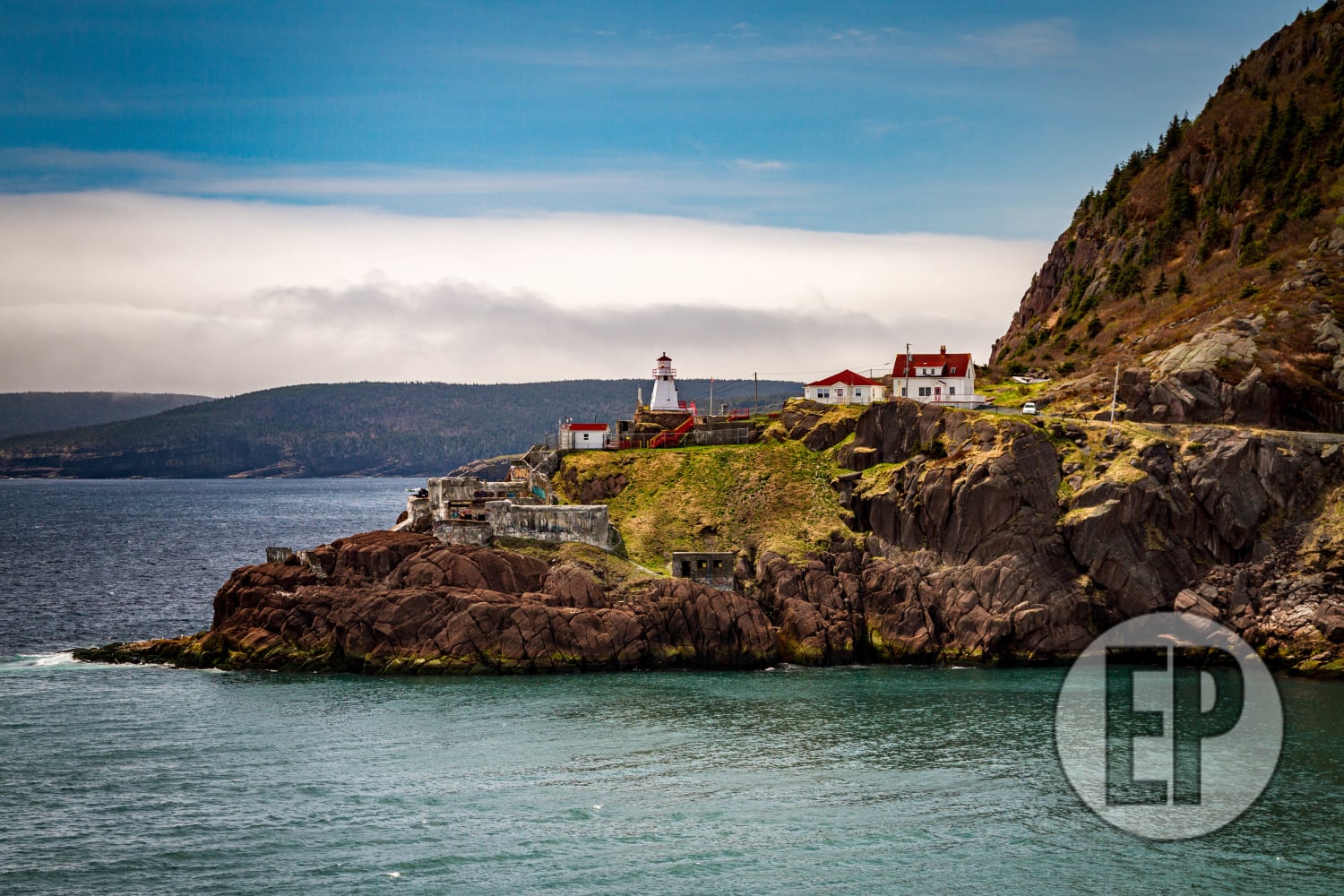
This image was captured in 2015, in Saint John’s, Newfoundland, when I was traveling for work and had some free time to take a boat tour of the bay and historic sites in the area. There is quite a bit of history in Saint John’s, being the place in North America that is closest east to the British Isles and the rest of Europe.
Lots of war history, especially involving submarines in World War II. Most interesting to me, though, is the fact that this is where Marconi accomplished the first transatlantic signal transmission.
Canyon De Chelly, No. 1
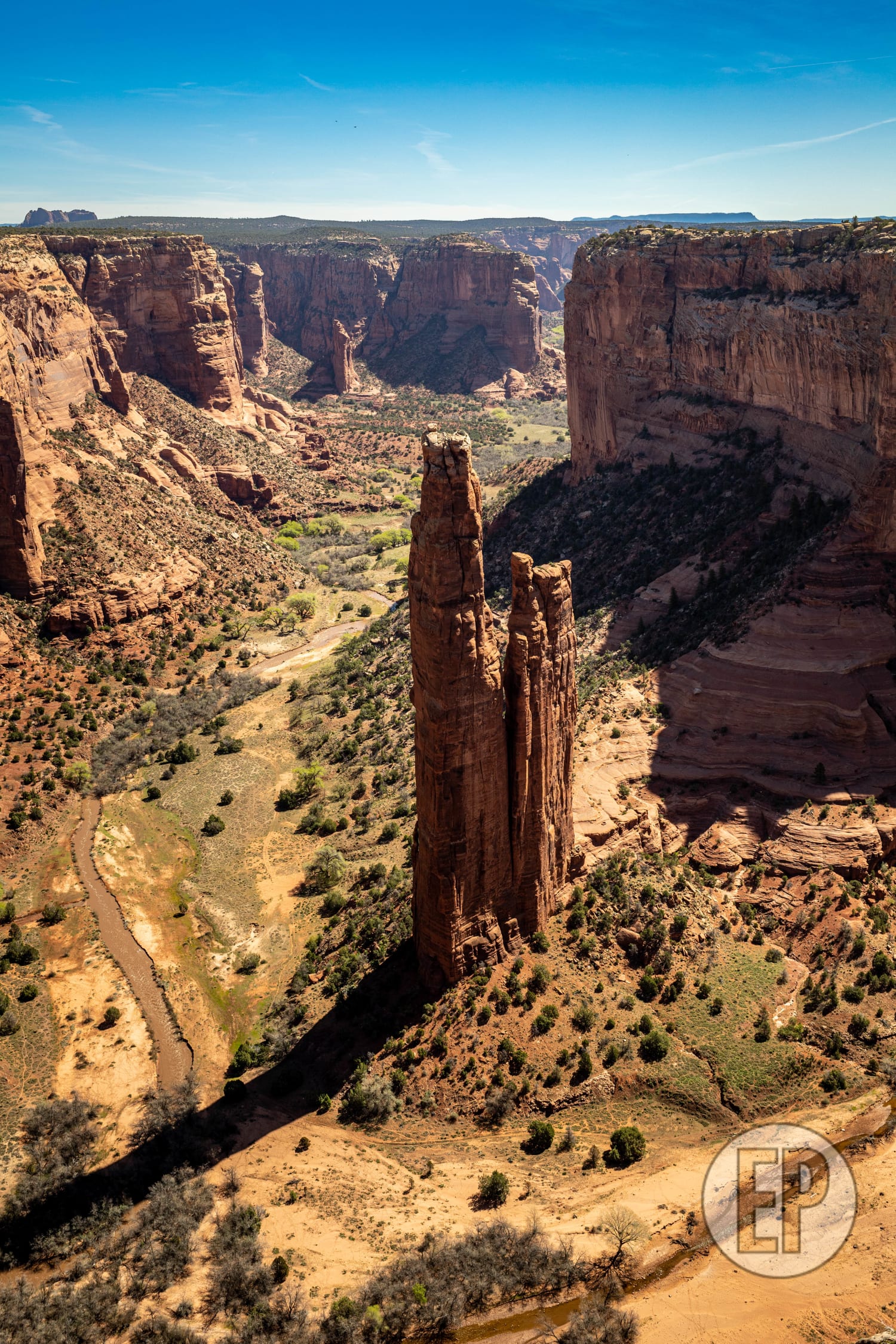
I captured this image in 2023, when I took my father on (another) whirlwind tour of the southwestern United States, specifically focused on the Four Corners region, mostly spending our time darting through and skirting around the lands of the Navajo Nation.
Unlike me, he had never been to Canyon De Chelly, and has always wanted to visit. So, we did. This shot is a photograph of Spider Rock, which has an interesting history: as the home of Spider Woman.
More About The RTPI Exhibition
Here is some more information about the exhibition from the original listing that informed me about the opportunity to submit my work (on a website called Call For Entry):
“The Roger Tory Peterson Institute in Jamestown, NY, invites artists to submit work for our fourth annual juried exhibition of Art that Matters to the Planet.
Art that Matters to the Planet explores the ways in which art and artists can help to shape a more sustainable future. Art that Matters to the Planet: Wild America will coincide with the 70th anniversary of the publication of Wild America: The Record of a 30,000 Mile Journey Around the Continent by a Distinguished Naturalist and His British Colleague, by Roger Tory Peterson and James Fisher.
We are pleased to announce that Kenn Kaufman will be serving as the juror for 2025. Kaufman is an American author, artist, naturalist, and conservationist who was strongly influenced by the artwork and writing of Roger Tory Peterson. In particular, Wild America inspired Kenn to pursue birds all over North America while he was still a teenager.”
The Institute continues the description, outlining three major themes of the exhibit, including exploration, place-based artworks, and environmental impact. They asked folks to submit works prioritized around the locations Peterson and Fisher visited (starting in Newfoundland) as they made their epic naturalist journey across the continent.
Here’s a map of the route Peterson and Fisher took, which is scanned from my copy of the book Wild America.
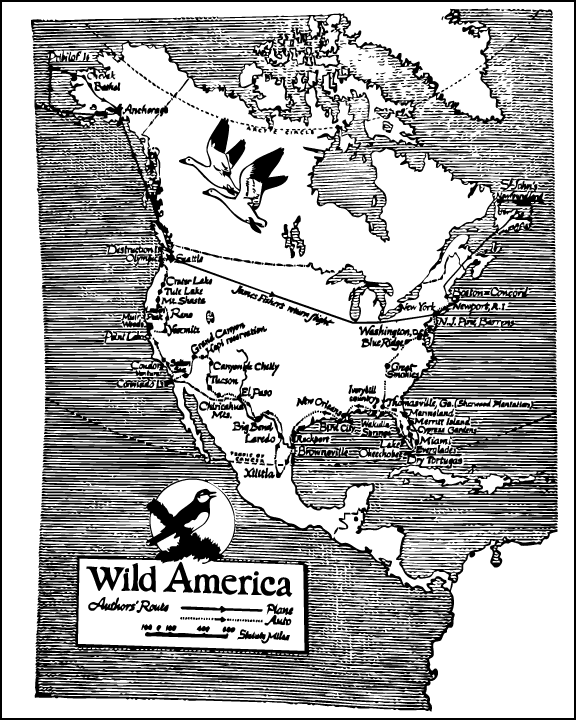
I would encourage everyone to get their hands on a used copy of this book and peruse the map and chapters/vignettes for themselves. I will be taking my copy of the book with me as I travel to Oregon and back for my residency in April and May.
In case you’re curious, here’s a map showing where the Roger Tory Peterson Institute is, in Jamestown.
The relevance of the work…
In addition to the typical artist statement one provides for these types of submissions, I was asked to include an additional statement of relevance, in a sense, of how my work best aligned with the theme of this year’s annual juried show: Wild America.
This was my response:
“Beyond the phrasing of my artist statement, which I believe aligns quite well with the intentions and themes of this exhibit, I am constantly exploring the natural world and wilderness whenever I have the chance, avoiding crowds, seeking solace, interpreting what I find through place-based capture in one or more frames as photography and timelapse. At the bare minimum, I am a conservationist at heart, often feeling adamantly beyond the pale of most others with similar leanings.
The primary driver of my creative expression is to capture and share the places that, thankfully, most people will not trammel, and thus must view from afar. I believe I can bring them closer through my work, and at the same time preserve the untrammeled nature of the wilderness in this biosphere we share with all other living beings.”
Then, a few weeks later, I received more good news.
And Then: Fragments of Hope
Recently the Cowee School Arts and Heritage Center, nestled in the community of Cowee, along the Little Tennessee River a few miles north of Franklin, announced a call for artists for a juried exhibition called Fragments of Hope. Here is the description provided by Cowee School:
“Fragments of Hope is a juried exhibition intended to depict the impacts of hurricane Helene on the lives of artists and artisans in western North Carolina, while conveying their strength and resilience as they move forward with their practices. The impact contemplated in each entry can range widely. From the loss of a beloved human or pet to the destruction of a community, church, home, studio, artwork(s), or treasured parts of the natural environment.”
This call was limited to artists residing in the counties of North Carolina most directly impacted by Helene: Alleghany, Ashe, Avery, Buncombe, Burke, Caldwell, Catawba, Cherokee, Clay, Graham, Haywood, Henderson, Jackson, Macon, Madison, McDowell, Mitchell, Polk, Rutherford, Swain, Transylvania, Watauga, Wilkes, and Yancey.
I submitted several pieces, three of which I was honored to be informed were selected for the show: Bent, Not Broken; Old River Road; and Hello, Helene.
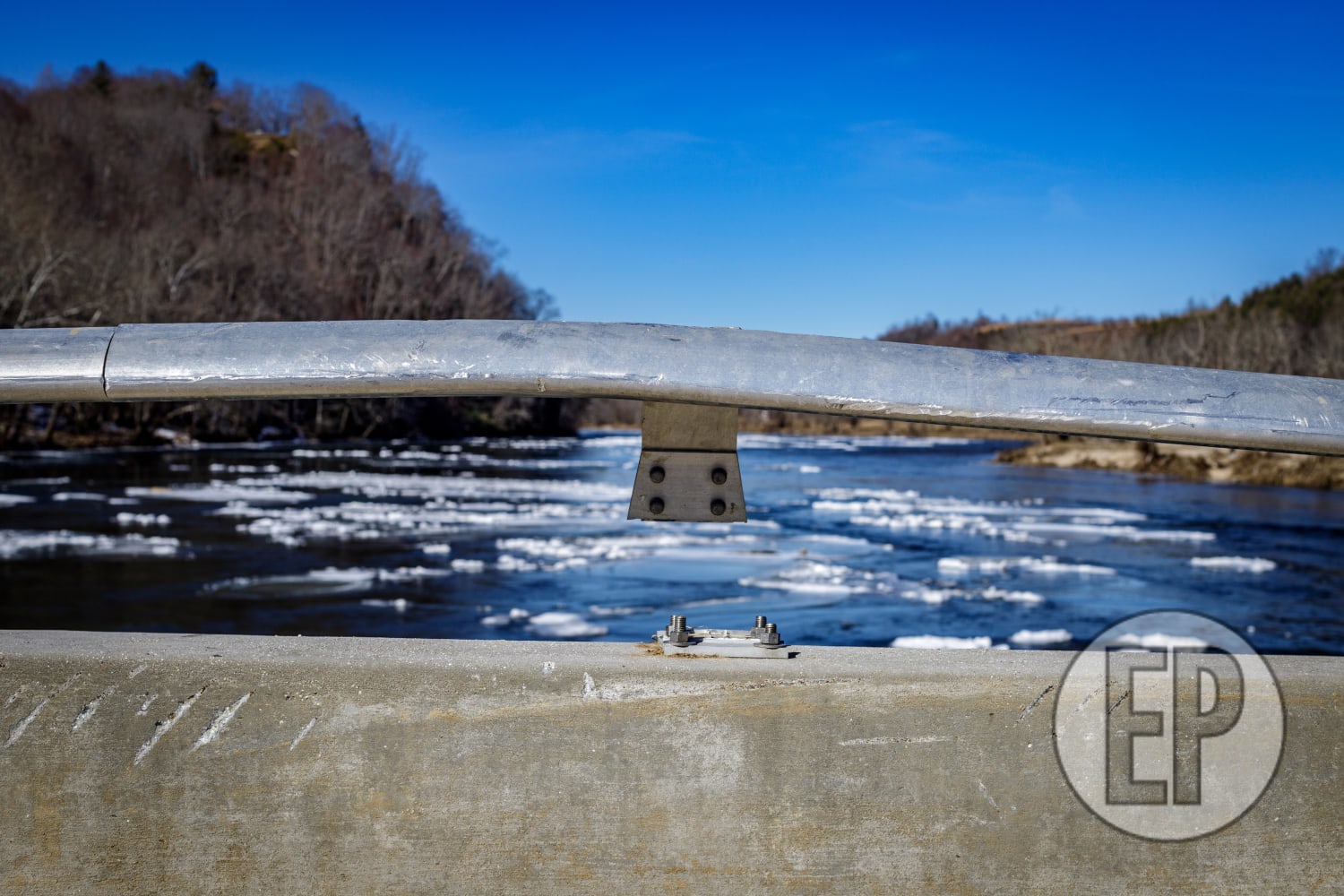
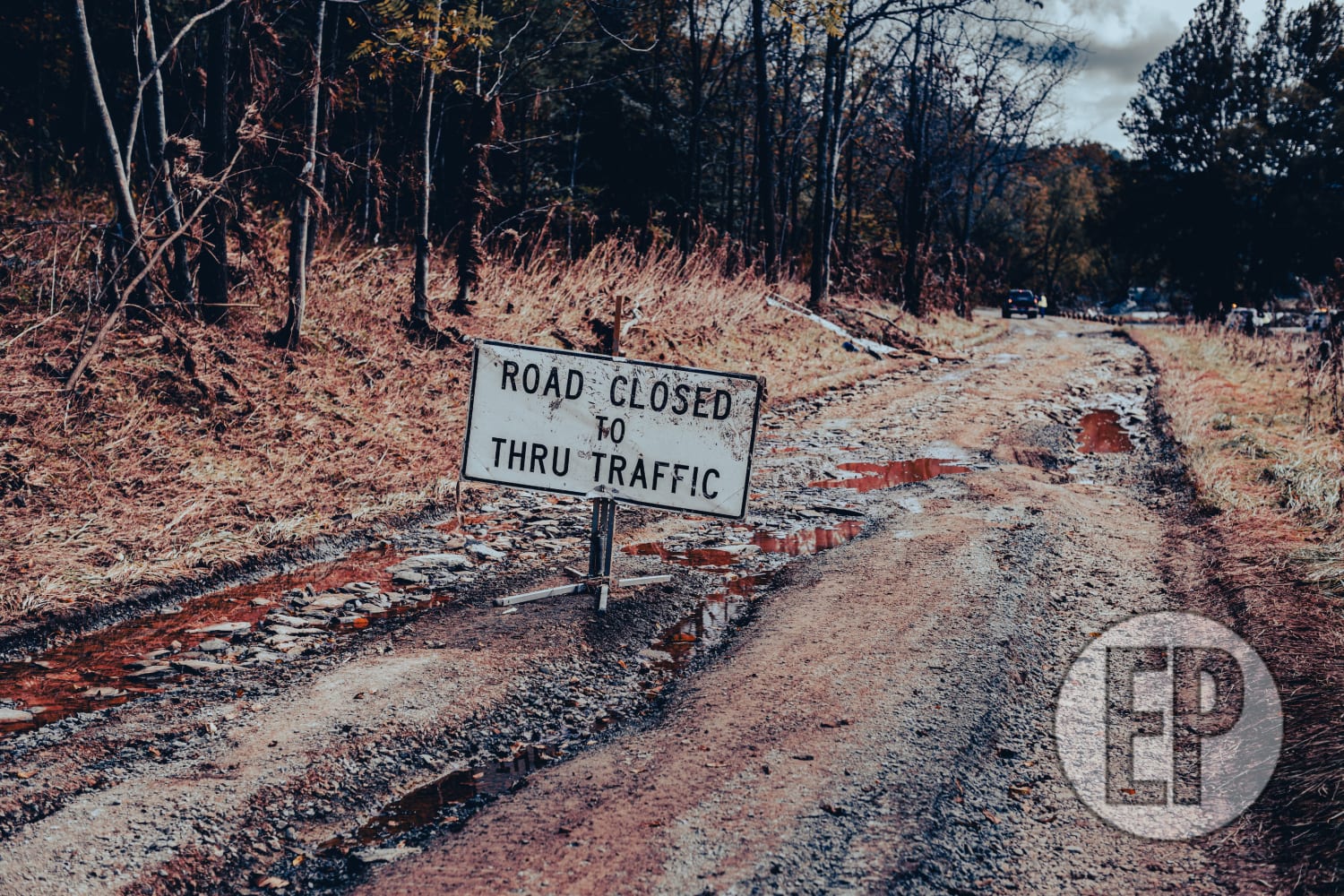
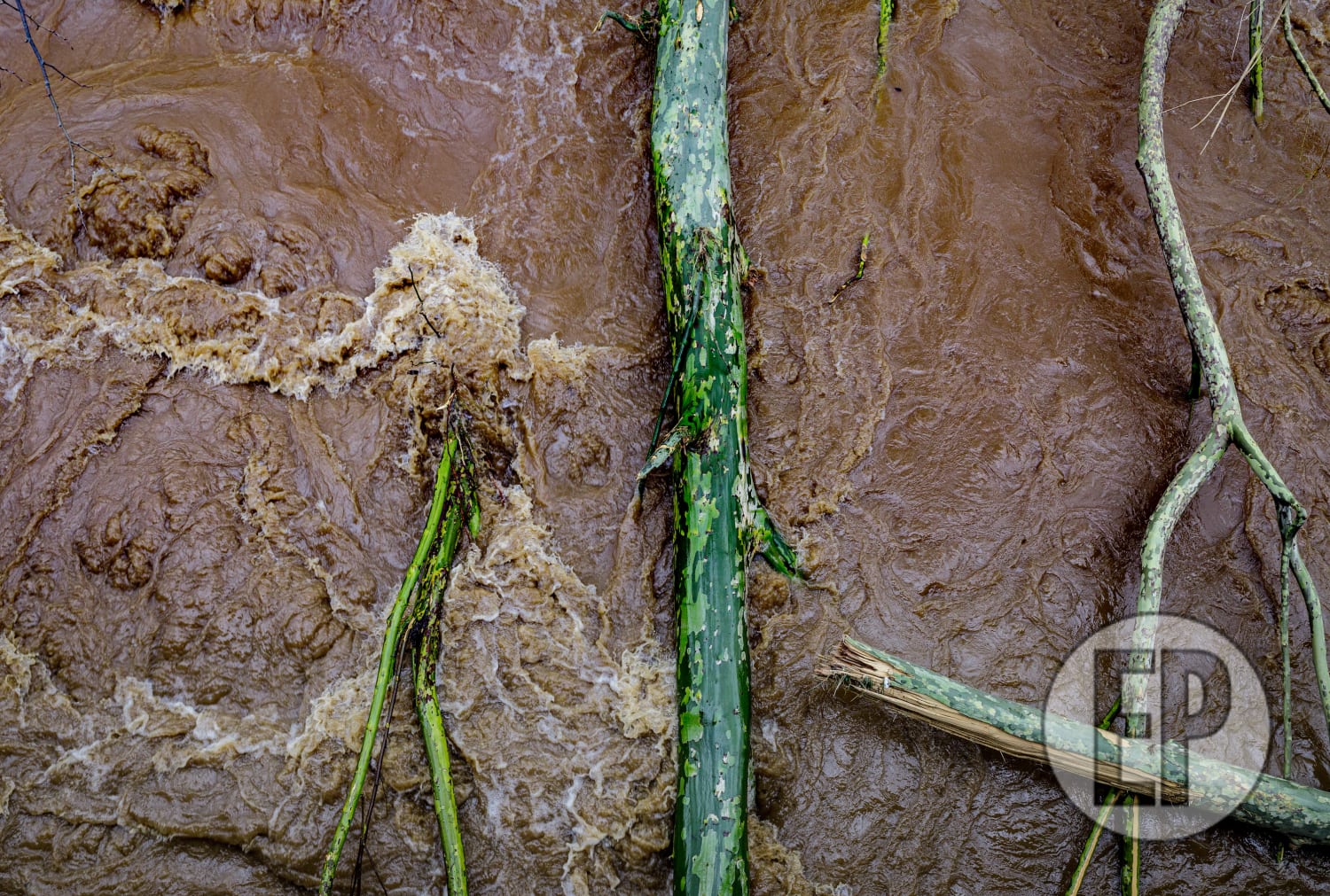
All three of these photographs were captured above or next to the waters of the upper New River, along the NC-VA border in the neighborhood of Alleghany County. (In case you’re curious, the bridge pictured in Bent, Not Broken is the Farmers Fish Camp bridge, looking upstream.)
The opening reception is Saturday March 8. More information about the exhibit is available on Cowee’s website here.
At the end of the call for artists, the folk at Cowee mentioned an additional opportunity:
“Additionally, 15 – 20 of the works in Fragments of Hope will be selected to travel to locations in North and South Carolina as part of a climate crisis exhibition and installation in 2025 and 2026, at the will of each artist. The Fragments of Hope exhibition will be paired with a large-scale, indoor climate emergency installation titled “Cat. 6: Actions or Consequences?” underway at the Cowee School Arts & Heritage Center in the Carolina Artworks studio. It is headed by a resident artist with the participation of more than fifteen artists, crafts people, and community volunteers.”
This would be an amazing opportunity to be included in this extended traveling exhibition. Fingers crossed!
The mission of the Cowee School is: “…to promote the teaching and preservation of the cultural and artistic heritage of the Southern Appalachians and Cherokee people and to serve as a community resource and gathering place.”
I encourage you to read more about Cowee School on their website. Here’s a map of their location. I haven’t been there, but I’ve been close by several times. It’s an unbelievably beautiful part of the continent.
I’m looking forward to visiting while my works are on the walls. I hope that I will be able to converse with the resident artist working on the climate emergency installation.
More of my work…
If you would like to see more of my work, please visit my portfolio website.
Also, please consider purchasing some prints to help support my photography endeavors. Thank you.
